

Designing Your Perfect House - By William J. Hirsch, Jr.

Place your order >
Designing Your Perfect House is available from Dalsimer Press.


Study actual pages from Designing the Perfect House.
---Get a sneak peak!

Archive for the ‘Wood’ Category

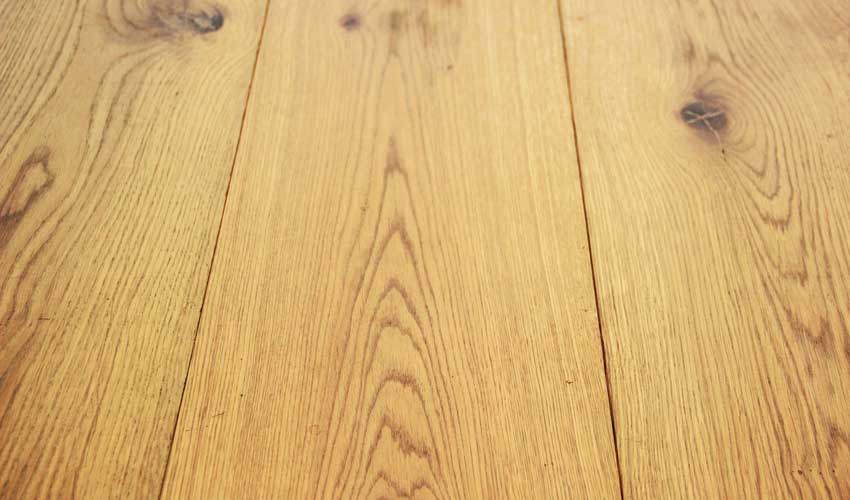
My Wood Floor is Shrinking
Saturday, January 1st, 2011

It’s winter and wood floors are shrinking. Here’s a question I received the other day about this common complaint.

Jean wrote:

Need your expert advice please if you can.  I have installed acres of 18mm solid wood flooring in all my rooms. this winter with the heating on it seems to be shrinking. Seems to be taking wooden studding with it, i.e., door frames fixed on top of it have moved too. Will this settle down do you think?  Many thanks in advance.

My answer:

This shrinking is due to the wood losing moisture content. The indoor relative humidity is usually quite low in the wintertime. As the air dries out, it draws moisture from the wood floors and the rest of the wood in the house, studs and doors included. When the weather warms, the relative humidity will go back up and the wood’s moisture content will increase. The wood floors, studs, joists, and doors will swell up again. If the wood was excessively moist when installed, it will never return to the original size. If the wood had the proper moisture content when it was installed, it will return to its original size. It’s impossible for me to say without knowing the condition at the time of installation. (more…)

What Direction Should Hardwood Flooring Run?

Saturday, October 23rd, 2010

Do you notice the direction hardwood flooring runs when you walk into a house? It can make a big difference in how it looks and how it behaves over time. Rule number one in laying hardwood flooring is the wood boards should run perpendicular to the floor joists below. This allows the boards to “span” from one joist to the next and be much more solid. If the boards were run parallel to the floor joists, most of the boards would sit only upon the plywood subflooring and not on any of the joists. The plywood is flexible and will “give” fractionally when walked upon. This is a recipe for squeaks and large gaps.

But another rule in laying wood flooring has to do with the aesthetics or look of the flooring. (more…)

Selecting Interior Trim

Sunday, May 30th, 2010

Selecting interior trim for your house can be a challenging task. But there’s a good trick you can use to help you make the right choices.

Trim is known as “casing” and “crown molding” in the business of construction and architecture. It includes the pieces of wood around windows and doors, baseboards, chair-rails, and crown molding. Modern style houses usually have a minimum of casing or trim. But more traditional style homes might have quite a lot of casing and crown molding. Sooner or later, you will have to select and/or approve these items. (more…)

A Question about Refinishing Kitchen Cabinets

Saturday, December 5th, 2009

I received this question concerning changing the color on existing kitchen cabinets and I thought I would share it with everyone. I get a lot of questions regarding cabinet colors, wood flooring selections and how they should “work together.” The question was:

I have new medium cherry cabinets in a new home that we have just purchased.  I would like them to be much darker.  Is it possible to do this without refinishing the cabinets?  What wood for flooring would you suggest to complement/contrast the darker cherry cabinets?

My answer: (more…)

Refinishing Kitchen Cabinets – Paint or Stain?

Tuesday, November 24th, 2009
 I received an interesting question about refinishing or painting kitchen cabinets on another blog post. Since more people are refinishing and remodeling in these difficult economic times, I thought this topic might be valuable to several more people, so I decided to give it it’s own posting.
 

 Joyce L. asked:

Thank you for the wonderful site! I am about to “redo” my kitchen. We will be installing light coloured tiles in the kitchen and have new oak floors in the rest of the house. The cabinets are of course the original goldish coloured, raised panel oak cabinets from the 80′s. The problem is that the finish on some of the cabinets almost looks new while other cabinet doors, especially those around the sink and stove area, are in dire need of refinishing. I’m afraid that if I try to refinish some of the cabinets they will not match the existing 30 year old wood/stain of the others. And refinishing all of the cabinets seems like too daunting a task. I’m almost afraid to ask this question but…I have heard that a grain filler can be applied to all the cabinets and then they could be …primed and painted (maybe white, I’m thinking country blue). There seems to be alot of controversy over painting wood, especially oak due to the pores. I would appreciate your advice.  (more…)

Wood Floors Are Not Just Oak Anymore

Thursday, August 14th, 2008

    When you mention wood floors to most people, they conjure up an image of a narrow board, red oak floor. But times have changed. Now there are many, many choices of board width and species. And many of these choices come at a modest cost increase. I’ve used white oak, antique chestnut oak, antique heart pine, santos mahogany, jatoba (aka Brazilian cherry), Australian cypress, cumaru, lyptus, and other species you may not have ever heard of. The range of color choices and grain patterns is impressive. (more…)

Kitchen Cabinets and Wood Floors – A Grainy Question

Sunday, August 10th, 2008

    If you have wood floors in your kitchen and a natural wood finish on your kitchen cabinets, should the floors and cabinets be the same species of wood and the same color or should they contrast? And if they should contrast, which should be the darker color?

    I often discuss this issue with my clients. My feeling is that there needs to be some color distinction between the flooring and the cabinetry so that the cabinets don’t look like the floor is simply wrapping itself up the walls. After all, one is the floor and the other is essentially furniture and they should express themselves differently. I would suggest that there is no rule about which wood is the lighter or the darker. (more…)

Return to Top | © Copyright 2012 -- Dalsimer Press - All Rights Reserved. For Disclaimer, Policies, and other Inquiries, please see our Contact Us section.