

Designing Your Perfect House - By William J. Hirsch, Jr.

Place your order >
Designing Your Perfect House is available from Dalsimer Press.


Study actual pages from Designing the Perfect House.
---Get a sneak peak!

Archive for the ‘Electrical’ Category

A Unique House Design Question

Sunday, February 1st, 2009

    I did a book signing yesterday at a Barnes and Noble bookstore. These events are good opportunities for people to ask me any question they like about house design and homebuilding. I have been designing all sorts of houses for many years. I think Lincoln was President when I got my architectural license. It was so long ago I really don’t remember. Over that long time, I thought I had answered just about every question anyone could ask about house design. But yesterday I realized I have been living in a delusional world. I got a question that literally left me speechless.

    A woman came up to the signing table, thumbed through my book, Designing Your Perfect House, and complimented me on it. Then she asked, “Do you design houses that protect people from radio waves.My answer was the same as yours probably would have been. Total silence. I had no idea what to say. (more…)

Home Lighting – Light Fixtures and Daylighting

Saturday, January 3rd, 2009

     People tend to not place enough emphasis on the lighting in their homes. It is often taken for granted and as a result, it is poorly designed.  There are lots of things you can do to reduce your electrical costs, improve the quality of the lighting in your home, avoid construction cost over-runs, and make your house more “green.”

      Natural day-lighting is something that has been under appreciated and undervalued in recent decades. But the current renewed concern about green building and high energy costs have changed that thinking. A good architect can help you orient your house properly on the land to maximize the benefits of free day-lighting without resulting in overheating of the house in summer months. In a well designed house, you should not have to turn on your electric lights during a sunny day. Simply placing windows on the southern walls (in a northern hemisphere site) will gain significant daylight, but the costs to cool the house will soar as the house will overheat badly. You will give up more energy money than you will save. Properly designed overhangs are needed, deciduous plantings, and sometimes shutters or shades can be used to maintain control over the natural lighting in your home. Indirect, reflected daylight is best. Direct sunlight is to be avoided. In addition to the heat gain direct sunlight can give, fabrics and carpets can fade under the intense rays of direct sunlight. (more…)

Homebuilding Costs – Avoid Electrical Shock

Wednesday, December 17th, 2008

      Do you want to control your homebuilding costs? Do you have electrical plans for your new house? Many stock plans show some electrical information, i.e. the location of switches, light fixtures and electrical outlets. Chances are this layout will not meet your needs, if you have a plan at all. One of the primary sources of homebuilding cost overruns is in the electrical work. If you do not have a well defined, complete plan that shows every switch, which lights each one controls, every electrical outlet, every telephone jack and every television jack, you will not have a guarantee that the contractor is planning on providing what you want in his contract price. I’ve seen people add numerous additional devices only to be shocked when the electrician tallies up the final total and presents the customers with a bill for the extras. Even if the cost is only $30 or $40 per device, they can add up fast and you’ll find yourself with thousands of dollars of homebuilding costs you never anticipated.

      Many electricians base their price on the number of junction boxes they install. Each switch, each electrical outlet and each light fixture counts as one box. So if you add an overhead light and a wall switch, this counts as two boxes. Usually, the location of the boxes does not matter. It is the number of boxes that is critical to your homebuilding costs. (more…)

Full Spectrum Fluorescent Lights – Do You Know What They Are ?

Wednesday, August 20th, 2008

    You already know that fluorescent lights save energy. You know that they burn cool and don’t add heat to the room. This reduces the air conditioning load in your house and also reduces the risk of fire when used in tight spaces like closets. But you hate the cold, blue light they give off. You don’t like the sickly color your skin has when seen under fluorescent lights. Your clothes don’t look right. Do the greys look like the tans? You’ve tried the “warm white” fluorescents and they make everything look too pink.

    You’re in luck. There is now a solution. (more…)

The Ceiling Fan Strobe Light Effect

Monday, July 28th, 2008

    Here’s a small, but important tip for placement of recessed lights in ceilings.    

    If you are placing a ceiling fan in the ceiling of a room and you plan on using recessed lights in the ceiling, make sure to keep the lights well away from the blades of the fan. If you don’t do this, the turning blades of the fan will produce a strobe light effect. Of course, if you’re really into disco and yearn for the 80′s, this might be a great thing. but for most of us, this kind of flashing light situation isn’t very good.

    So my general rule is to keep the ceiling lights at least a few feet away from the ends of the fan blades and even more if the fan is suspended farther away from the ceiling.

Bill Hirsch

www.designingyourperfecthouse.com

www.williamhirsch.com


A Bright Look at Dimmers, Light Switches and Plate Colors

Sunday, July 27th, 2008

    I had a client ask me about light switch type, color and what I thought about dimmers.

    One question was whether or not the Decora style switches, those are the ones with a wider, flatter, rocker type of switch, were “expected” in a high-end house. I told them that I have some clients who like the Decora switches, but I could not say it is the majority opinion. I don’t think there is any expectation of them in a high-priced house. (more…)

Electrical Outlets in Baseboards Might Make Sense
Tuesday, July 22nd, 2008

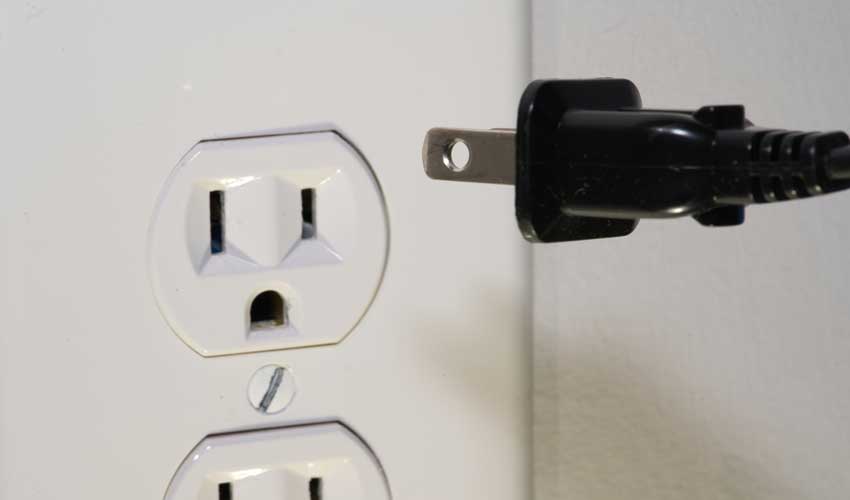
    Some parts of a house never seem to be in a good place. Electrical outlets (the place where you plug in the cord) are often in obtrusive and clumsy places. Many times you don’t have a choice because the National Electric Code requires outlets where you don’t think you really want one. But the Code is the law of the land. So if you want to get your Certificate of Occupancy and actually move into Your Perfect House, you’ll need to comply and put that unwanted outlet in the wall, anyhow. (more…)

Return to Top | © Copyright 2010 -- Dalsimer Press - All Rights Reserved. For Disclaimer, Policies, and other Inquiries, please see our Contact Us section.