

The Right Bathroom Design Is an Important Part of Your Perfect House
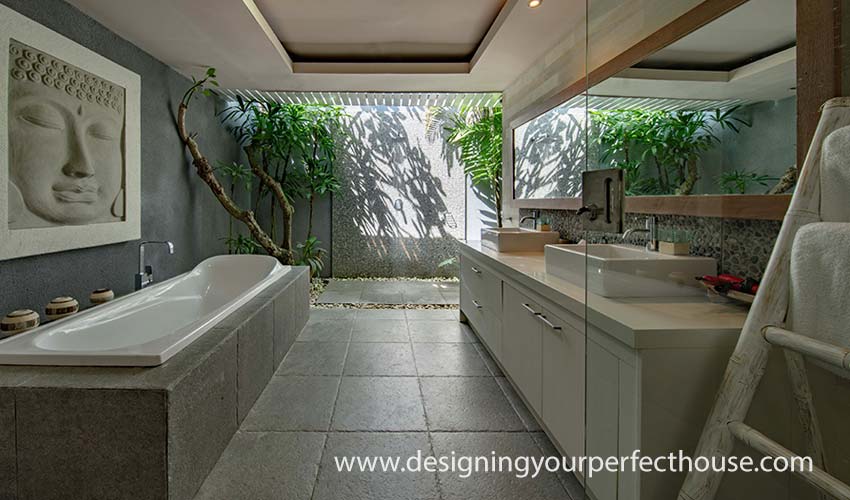
Just like kitchen design, bathroom design has changed dramatically in recent decades. Bathrooms, especially master bathrooms, have become far more than the simple, utilitarian room they once were. They have evolved from simple, white tiled, sanitized spaces into personal retreats and at-home spas. And like everything you might design in your house, designing a good bathroom requires planning, good information, and careful thought.
The first critical step in bathroom design is to do what architects call Programming. It’s an important part of House Planning. This is the process of listing your needs and desires for your bathroom. You might call it pre-planning. If you don’t set clear goals, your perfect bathroom will become a moving target and you’ll never know when it’s just right. Start by asking yourself questions about your bathroom. Prioritize your desires. Chances are costs will play a role in your decisions somewhere along the line.
Bathroom Design Programming Questions
- What should your perfect bathroom design be? What will its feel and character be?
- Should it be spacious or cozy?
- What sort of Bathroom Layout will be best?
- Should it be large enough for two people to use at the same time?
- Do you want it “compartmentalized” with a separate room for the Toilet, or Shower, or Bathtub?
- Do you want two Sinks?
- Will the sinks be on the same Vanity or will they be separated and located in different places in the room?
- Do you want a sit-down makeup Vanity?
- What style of Cabinets will your ideal bathroom have?
- What type of Countertop is best for you? Material? Height?
- Do you want a Bathtub? Is it free-standing or set into a platform? Is it integral with the shower?
- What kind of Mirrors will your bathroom have? Will they be framed or a full wall of mirrors?
- What kind of Lighting do you want?
- Will the mirrors have built-in lights?
- Will your Shower be built for two?
- What kind of Shower Enclosure do you want?
- Will the shower have glass or Tiled walls?
- Will your shower have a door?
- Will your shower have a curb or be flush with the bathroom floor?
- What type of Flooring? Should it be Tile, Wood, or something else?
- What type of Towel Bars will your bathroom have?
- Will it be Handicapped Accessible now?
- Should the bathroom be set up to be handicapped accessible in the future with a minimum of alteration?
- How will you keep the mirrors from steaming up?
- What kind of Bathroom Fan is most efficient and quiet?
- How much storage do you want for linens, makeup, and other necessary items?
- Do you want a heated bathroom floor?
- Do you want a heated shower floor?
- Do you want a heated towel bar?
- Do you want a heated mirror?
The list can go on and on. It can help to use a Checklist to guide you. This will guarantee you think of all of the aspects of bathroom design you should consider.
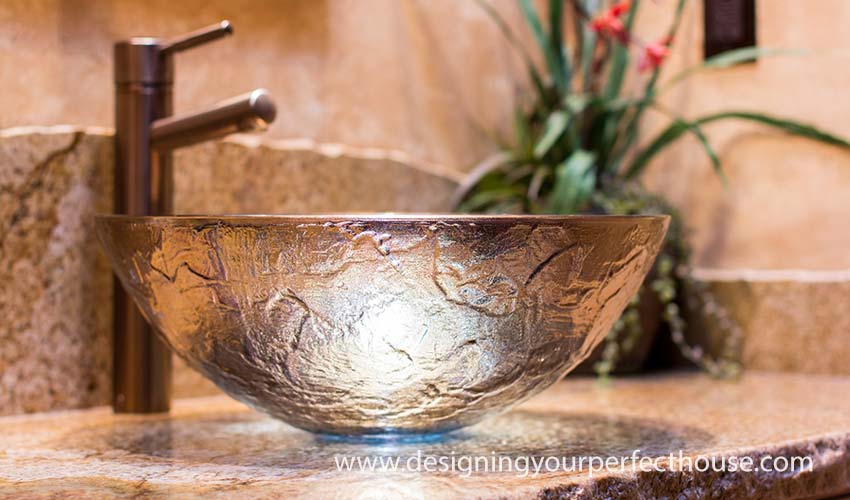
It’s also helpful to look for photos of bathroom ideas and other Bathroom Tips. Photos and images of other bathrooms can help you visualize the style and character of your new bathroom. You don’t have to copy these images exactly, but as they say, a picture is worth a thousand words. But, your collection of photos and images will help communicate your ideas to your architect or interior designer.
Here are some general rules for a good bathroom design:
Plan enough space for each fixture and function
 For example, plan for a place to dry off when stepping out of the shower. Plan a convenient place, and enough wall space, to hang towels within easy reach of the shower and tub. Make sure there is room to stand at the sink and not get hit with the door when your partner comes into the room. Think about where things will be stored near your sink. Is there enough countertop area? Do you need things plugged in for power? Can drawers open and close without hitting other things? Make sure to have enough room to maneuver around the toilet. If the toilet is in a separate room or “closet,” is there room to step in and comfortable close the door behind you? Consider how you would move if you have restricted mobility in later years.
Plan for daylight and privacy
A good bathroom design, like any room, benefits from natural light. Getting natural light into your bathroom while maintaining privacy from the neighbors requires good planning. Think about what’s around your house when placing your bathroom windows. One way to gain natural light with privacy is to create a private outdoor garden space with a privacy wall around it. You can then have windows without shades or even patio doors into the garden and never need to worry about prying eyes.
Think through your daily routine
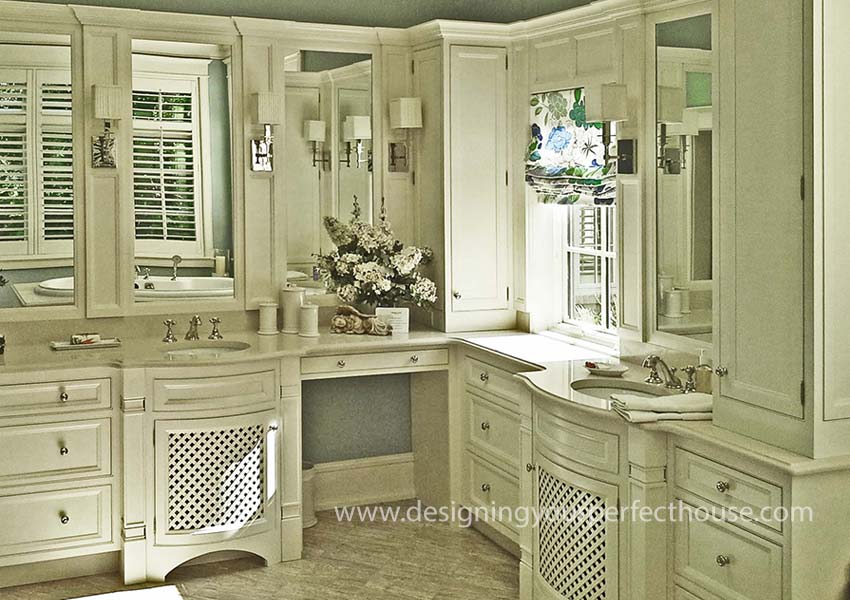
If you and your partner need to get ready in the morning at the same time, you might want a bathroom that is split into zones. I call this a compartmentalized bathroom design. You could separate the vanities and sinks from the bathing area so one person could shower while the other is fixing their hair. Think about where you place the toilet. You don’t want to walk farther than necessary in the middle of the night.
Plan how your bathroom relates to the bedroom and closets
Some people prefer to have their closet accessible directly from the bathroom. They feel it makes dressing easier. Other people like to separate the bath and closet. They prefer to enter the closet only from the bedroom. Design your bathroom-bedroom-closet arrangement to suit the way you really live.
Consider your mechanical and electrical needs
Don’t place shower valves on exterior walls. They are more susceptible to freezing and harder to repair if they ever leak. Plan for access to whirlpool tub motors and isolate them for better sound control, if possible. Provide good ventilation for odors and humidity. Design in the lighting from the beginning. Light for the vanity should come from two directions, if possible. This will allow one light to fill in shadows cast by the other.
Plan for your future needs
Yes, we do all grow older. If you’re going to the expense and effort to remodel or build your ideal bathroom, make sure it will still be ideal when you are less mobile, susceptible to falling, and need more light for good vision. Make sure there is enough floor space to move freely. Make sure your doorways are wide enough. They don’t have to be huge to work. But a 24” wide door is not wide enough for a wheelchair. Plan for the placement of grab bars and other wall-mounted accessories. It’s easy to install wood blocking between the wall studs now to be sure these items are solidly anchored when they are installed later.
Think about your luxuries
Do you want heated floors or towel bars? Do you want a steam shower? Do you want a spa experience in the shower with body sprays and a rain-head shower? Should your perfect bathroom include music, a television, a fireplace, or aromatherapy? This is your chance to make your bathroom design exactly what you’ve dreamed of.
Consider cleaning and maintenance
What type of flooring, countertop, and wall finishes are best for you? Some finishes look great but require constant maintenance. Make sure you know all the characteristics of each of your selections before finalizing your choices. Chances are you will make different choices for your master bathroom than you might for your children’s bathroom.
Your other bathrooms require proper planning and design, too. Even though they might be less elaborate, don’t neglect them. Every bathroom design is important, including the powder room. Doing it right will make your house better.
I hope this information is helpful to you. You might want to get yourself a copy of my best-seller, Designing Your Perfect House. It is chockfull of valuable tips and advice that will save you many times the cost of the book on your house building or remodeling project. You might also like The Well-Centered Home: Simple Steps to Increase Mindfulness, Self-Awareness, and Happiness Where You Live. It will show you how to make your home a happy place.